What Is PDLC Smart Film?
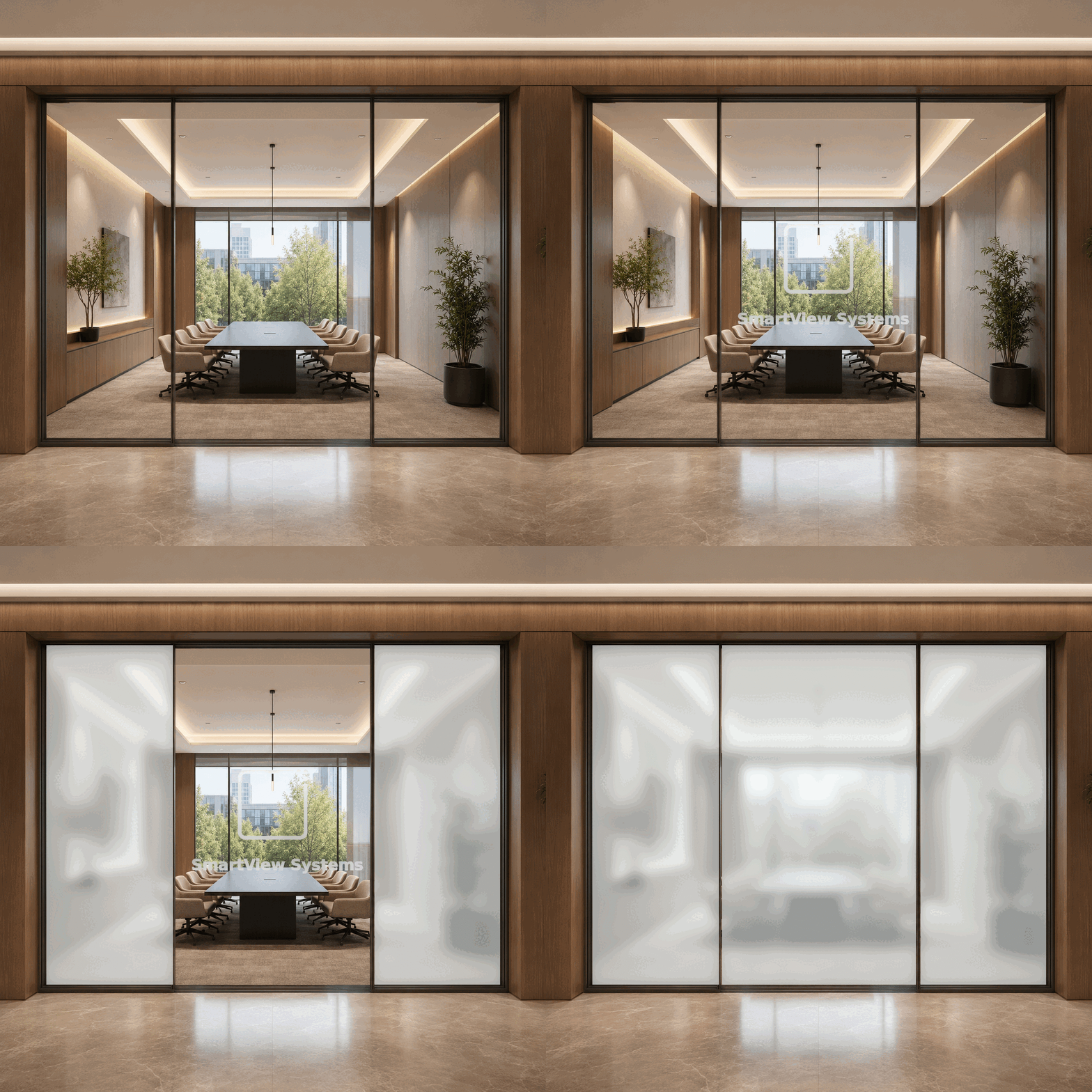
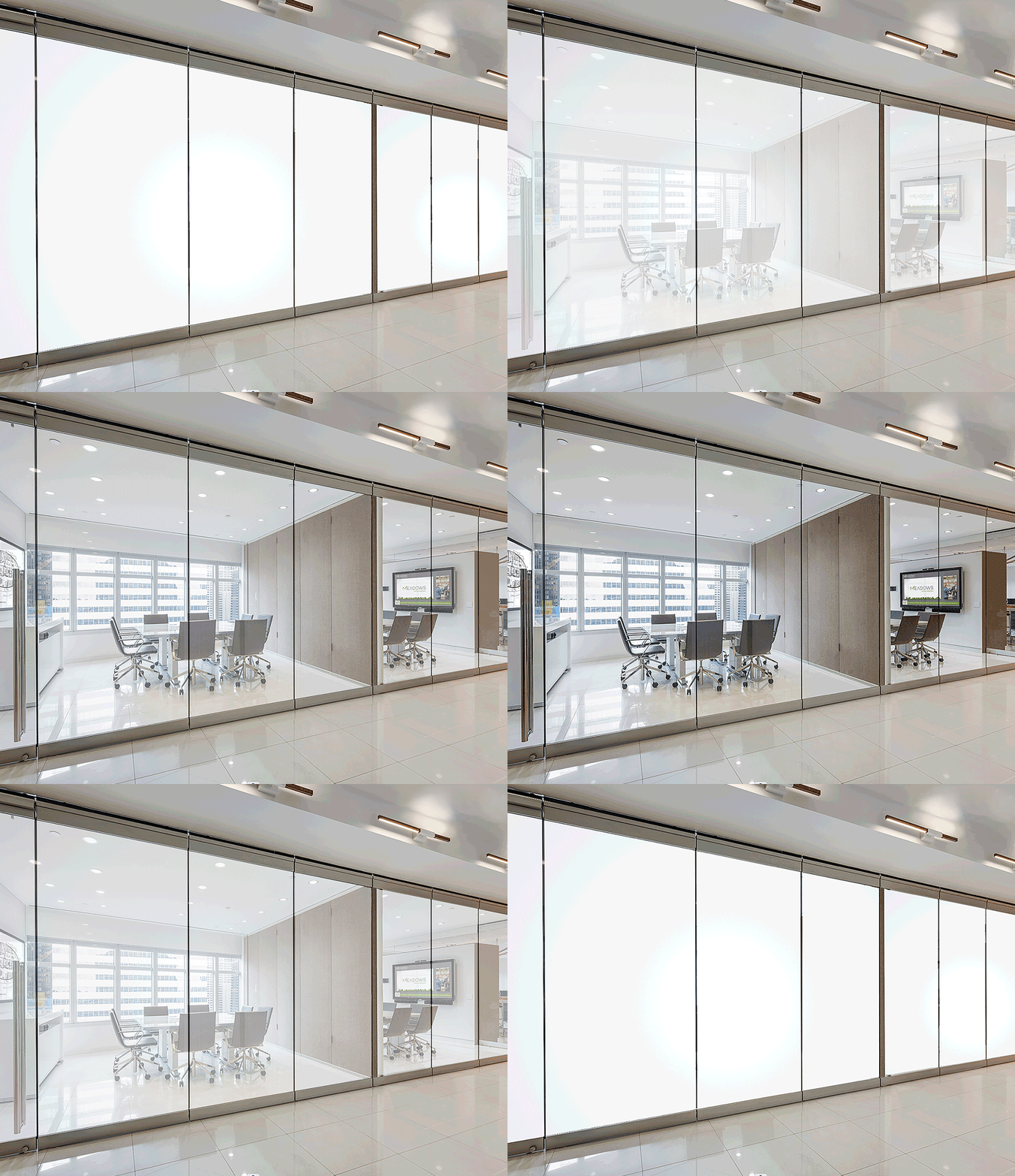
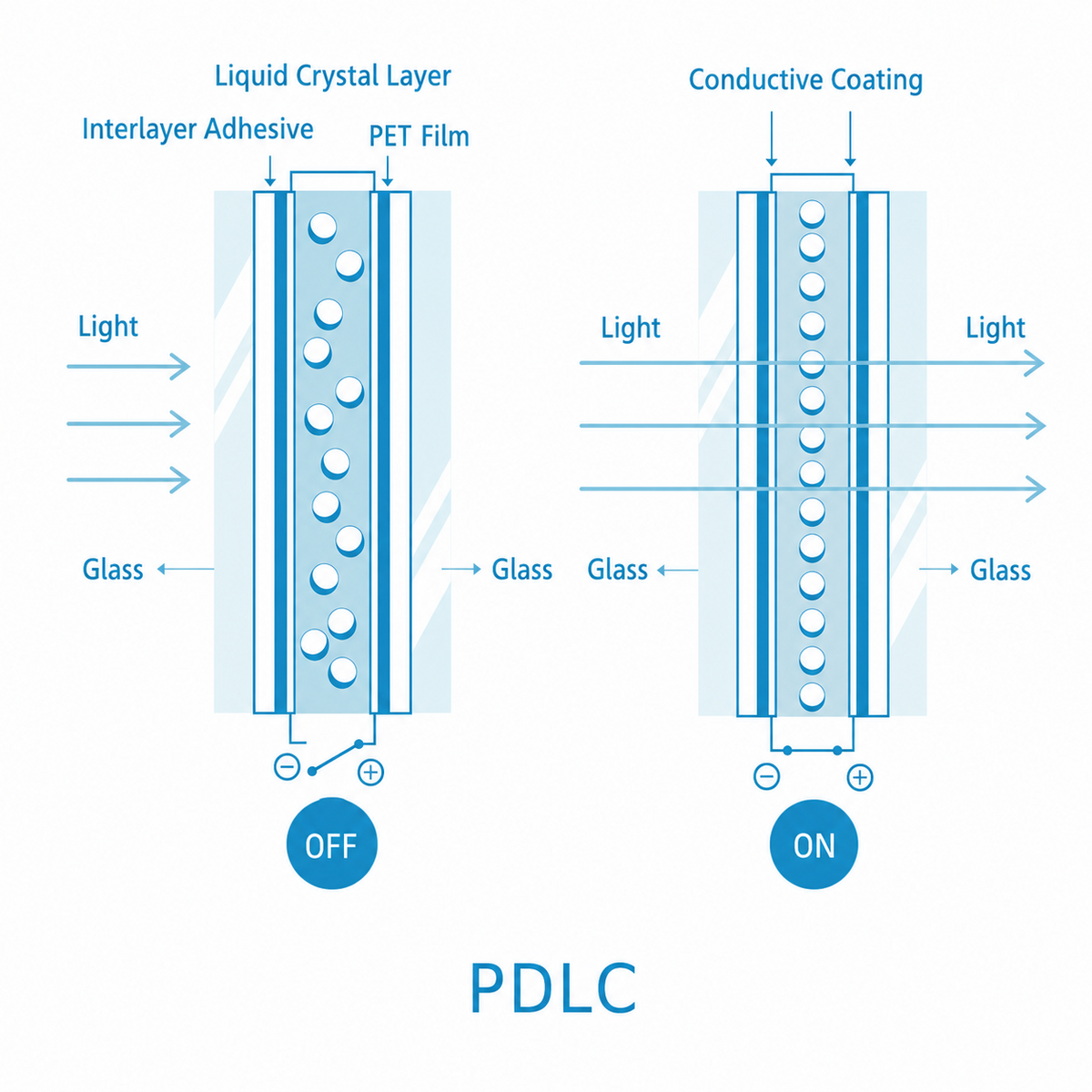
PDLC (Polymer Dispersed Liquid Crystal) Smart Film is an electrically controlled layer that transforms ordinary glass into switchable privacy glass. It can be applied to existing glazing or laminated between two glass panels, preserving the clean appearance and natural light of the space. When powered, the liquid-crystal molecules align and allow light to pass through, making the glass transparent.
When the power is switched off, the molecules return to a random arrangement, scattering the light and creating a uniform frosted privacy effect. The transition is instant and can be controlled by a wall switch, remote control, or smart building system—without curtains, blinds, or mechanical partitions.




How the Technology Works?
At the core of PDLC Smart Film is an active liquid-crystal and polymer layer sealed between two transparent, electrically conductive PET surfaces. Discreet busbars positioned along the edge connect the film to a dedicated transformer and controller, distributing a stable electrical field across the entire panel. This layered construction ensures fast, even switching without mechanical components or visible moving parts.
The film can be laminated inside the glass during production or installed as a retrofit solution on existing glazing. Larger installations can also be divided into independently controlled zones and connected to wall switches, sensors, remote controls, or building automation systems.
PDLC
Standard-mode PDLC is designed for environments where privacy should be the natural resting state. Without electrical power, the glass remains frosted; once activated, it opens to a clear view.
This privacy-by-default behaviour makes PDLC particularly suitable for meeting rooms, executive offices, medical spaces, hotel bathrooms, and residential interiors. The translucent surface softly diffuses daylight and can also serve as a projection screen when required.
PDLC allows the same glass partition to alternate between visual separation and open communication, giving architects greater flexibility without changing the physical layout of the space.
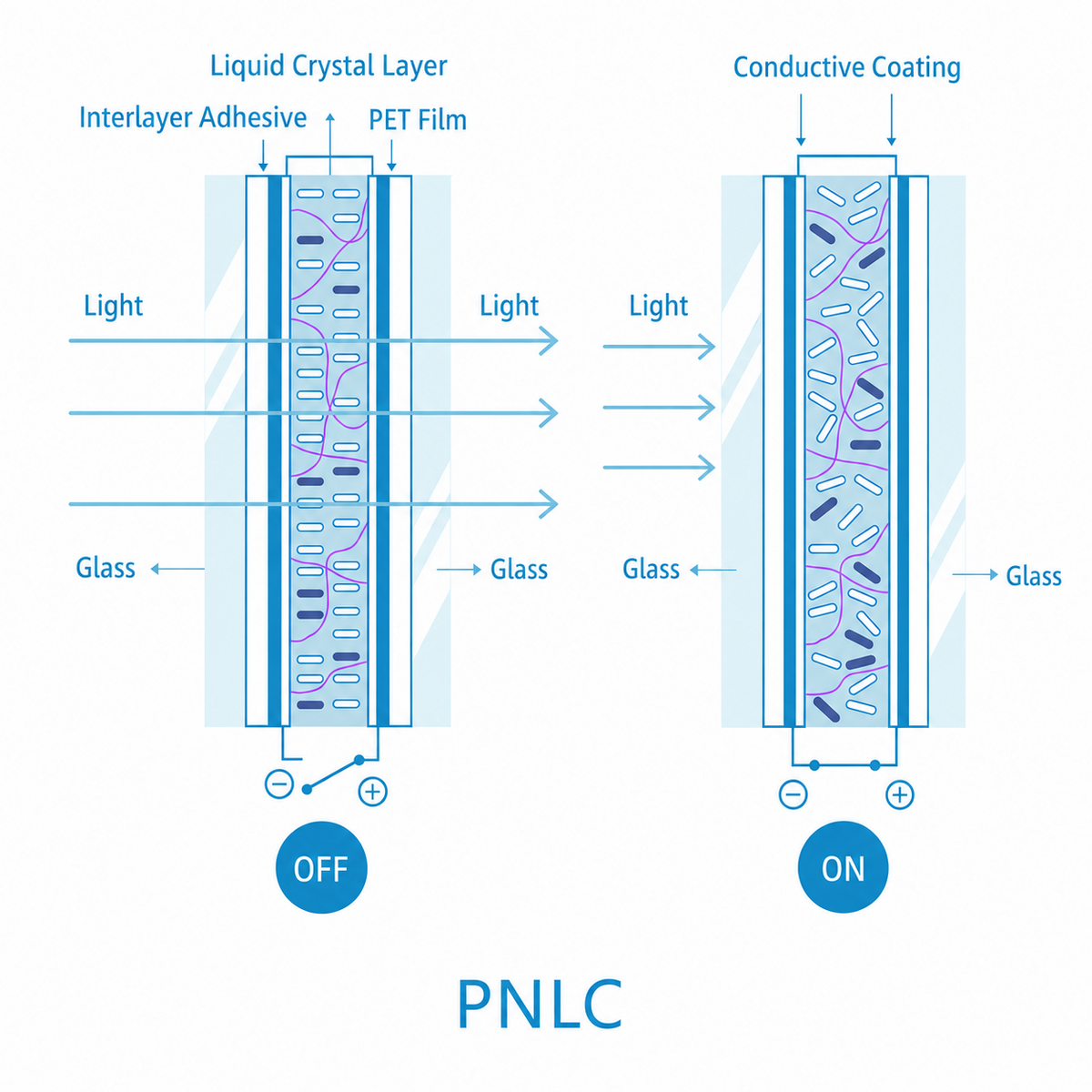
PNLC
PNLC (Polymer Network Liquid Crystal) uses a reverse operating mode for projects where transparency is required most of the time. The glass remains clear without electrical power and becomes frosted only when privacy is activated.
This transparency-by-default behaviour is ideal for shopfronts, public areas, façade glazing, observation spaces, and interiors that should normally maintain an unobstructed view. Since power is needed only during the privacy state, PNLC is especially efficient in transparency-dominant environments.
It preserves the open character of the architecture while providing discreet visual screening whenever it is needed.

Applications
PDLC and PNLC Smart Films allow glazed surfaces to respond to different privacy, visibility, and space-planning requirements. In corporate environments, they create adaptable meeting rooms, executive offices, and collaborative areas without permanent walls. Hotels and residences use them for bathrooms, bedroom partitions, wellness zones, and panoramic windows.
Healthcare facilities benefit from smooth, easy-to-clean glass partitions around patient and treatment areas. Retail stores, museums, and showrooms can reveal or conceal products, exhibits, and interior spaces on demand.
The technology is also suitable for banks, educational buildings, transport hubs, control rooms, and architectural façades, with individual panels or complete glass zones controlled independently.